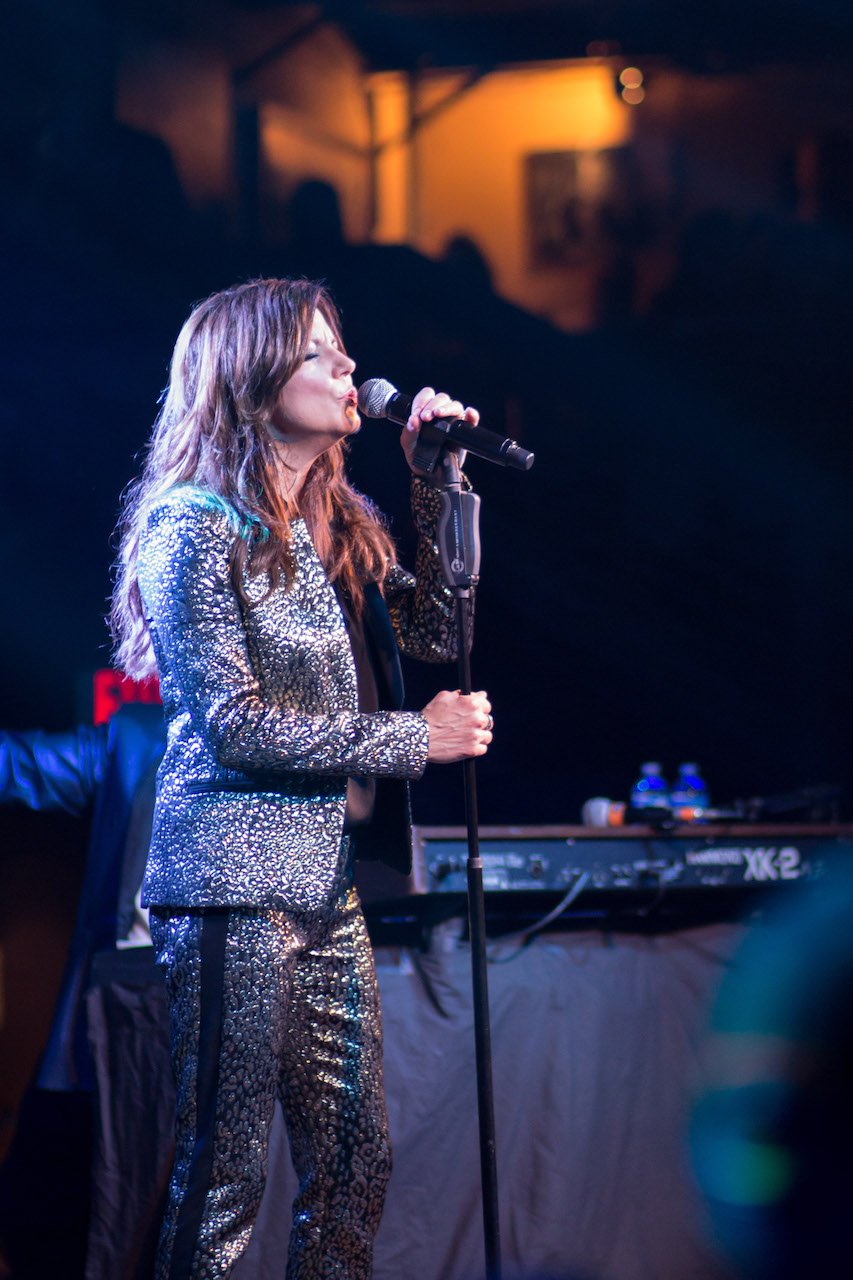
As with everything concerning President Donald J. Trump — including the boos that greeted him for Game Three of the NBA Finals between the New York Knicks and the San Antonio Spurs at Madison Square Garden in Manhattan Monday night — much has been written about his on and off Freedom 250 concert series. It included an array of performers from country music’s Martina McBride to funk and soul’s The Commodores — until it didn’t.
With the exception of Vanilla Ice and Flo Rida, the artists dropped out, citing misinformation about the series’ partisan nature, which spurred commentators on the right and the left — to say nothing of Trump, who cancelled the series in favor of one of his rallies — to deride their talents and motivations. But after 46 years, and counting as an arts and cultural writer, I can tell you that those talents and motivations are immaterial to a story that is really about Trump and the Trump Administration’s inability to understand the arts.
No artist, no matter how successful, earns Silicon Valley or Wall Street billions and trillions. Taylor Swift does not have as much money as Jeff Bezos. And Swift dwells on a loftier plane than most performing artists, only 10% of whom make a living solely in that field. Only about 2.3 to 5% of fiction writers make a living at that kind of writing, while only 1 to 10% of visual artists make a living at their craft.
But what all artists lack in traditional power they make up in freedom. See how that works? The more power you have, the more you have to lose, for power is all about attaining and maintaining power and acquiring more. But the real power — and this is the central tenet of virtually every major religion — lies in personal freedom, which comes from your integrity or wholeness, your commitment to your ideas and ideals, your sense of self, your community. That kind of leverage enables you to walk away, which is what the Freedom 250 concert series artists mainly did.
It’s what all 17 members of the President's Committee on the Arts and the Humanities did, en masse. on Aug. 18, 2017, in protest of Trump 1.0’s "there’s good and bad on both sides" remarks following the white supremacist violence in Charlottesville, Virginia, that killed Heather Heyer, a paralegal and civil rights activist.
Still lcueless, Trump 2.0 tried to fashion the John F. Kennedy Center for the Performing Arts in Washington, D.C., as much a memorial to the slain president as an arts center, into a temple to himself, adding his name and appointing administrative cronies who did not even understand that ticket sales are only a portion of the revenue stream.
A judge has ordered Trump’s name removed, stating that only Congress can approve a name change, and headliners like the National Symphony Orchestra are champing at the bit to stage their seasons. But performances scheduled for America’s 250th, like “Hamilton,” were canceled, and opera star Renee Fleming, a McLean, Virginia, resident, resigned as the center’s adviser-at-large.
All this loss and chaos, and for what? Because Trump doesn’t understand that with or without money, art and artists are by nature about being true to themselves. There’s a word for artists who are true only to a political leader. It’s called propagandists.
Meanwhile, Bruce Springsteen and guitarist Tom Morello are organizing a “Power to the People” protest rally to take place in Columbia, Maryland ,in October.
It’s perhaps more than a coincidence that it will be held at a pavilion named for Marjorie Merriweather Post, the original owner of Mar-a-Lago.