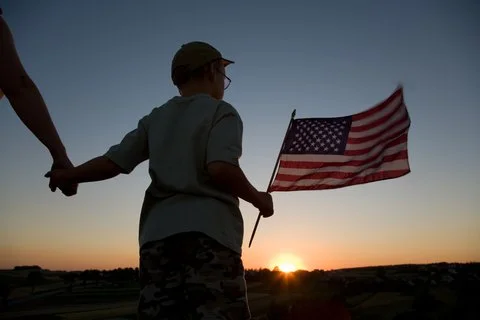
As we approach the 250th anniversary of the signing of the Declaration of Independence — marking the official birthday of the United States of America Saturday, July 4 — I keep coming back to the title of Fairfield University’s yearlong cultural programming on the subject, “America 250: The Promise and Paradox.”
On the one hand, many have said they are in no mood to celebrate. They point to the Iran War, the harsh treatment of migrants, the coopting of civil liberties and the loss of a standard of living despite the soaring stock market. Even the U.S. Supreme Court’s 6-3 decision to uphold birthright citizenship and President Donald J. Trump’s redesign of Washington, D.C. strike them as losses. (In this I’m reminded of “How the Grinch Stole Christmas” and the need not to let others rob you of your joy.)
On the other hand, the U.S.’ co-hosting of the World Cup has been a smashing success, with foreign visitors praising the hospitality, culture and food of rural, suburban and urban areas from sea to shining sea. America is a big country, these marveling posters say — big in size, big in portions and big in heart.
What is going on here? Undoubtedly, the U.S. hosts come from all political persuasions. That means many of them voted for Trump and his anti-immigration policies, which have often come with severe penalties for citizen protesters. Is there a contradiction in hosts’ graciousness to World Cup visitors?
Not really. Most religions and philosophies hold that people are basically good. It’s human nature to put your best foot forward to try to make others happy — and leave a good impression. (It is one of my earliest childhood memories, playing at hosting a dinner party in kindergarten and telling the class to “eat up, folks; there’s plenty more where that came from,” which got a big laugh.)
The other side of that unwritten contract is that guests are equally gracious — respectful and appreciative; cleaning up after themselves (see Japanese World Cup attendees); and, above all, not overstaying their welcome. “Fish and visitors stink in three days,” popularized by Benjamin Franklin’s “Poor Richard’s Almanack,” sums up the attitude toward lingering guests.
Migrants, of course, are not viewed like the World Cup guests here, who are spending and posting glowing reviews before their departure. They are instead seen as refugees, opportunists, parasites — take your pick. And in truth some are here only to game the system or worse, commit serious crimes. But most seem to want nothing more than an opportunity, which is what our ancestors sought. Fear drives many to arrive illegally. And here they meet with a substantial portion of the American populace that fears their arrival only adds to their own diminishment.
Trump and his administration have stoked this grievance and fear. In the latest move, the Supreme Court backed a Trump plan to end protective status for hundreds of thousands of Haitians and Syrians. They’ll now presumably be deported. But what will happen to the nursing home, factory and meatpacking jobs they filled? Will American citizens take them on?
Here the 10th anniversary of Brexit is instructive. The British exited the European Union in part because they didn’t want foreigners taking their jobs. (The U.S. can talk a good game about independence. But clearly the American apple has not fallen far from the British tree.) Yet the British haven’t exactly rushed to fill the void created in the manual, menial jobs many of these foreigners held. Moreover, Brexit has rewritten the rules of global trade for the British, seriously damaging their economy.
Pope Leo XIV, accepting the Liberty Medal from the National Constitution Center in Philadelphia via video Friday, July 3, offered another way.
“…The moral greatness of a nation is manifested, above all, in its capacity to support, protect and cherish the lives of all, especially the most vulnerable and those whose worth is questioned,” he said.
The pope — who will spend the Fourth on Lampedusa, the Italian island that is a gateway for migrants — continued: "I therefore pray that this, the 250th anniversary of the founding of this great nation, may be the occasion of a solemn recommitment to these ideals that have made America a country that values peace and prosperity, a country characterized by generosity and nobility of heart."
In the past few weeks, we have seen times when that heart has shuttered and times when it has opened and flowered.
So there you have it — the paradox but also contained within it the continuing promise.
Happy Birthday, America.