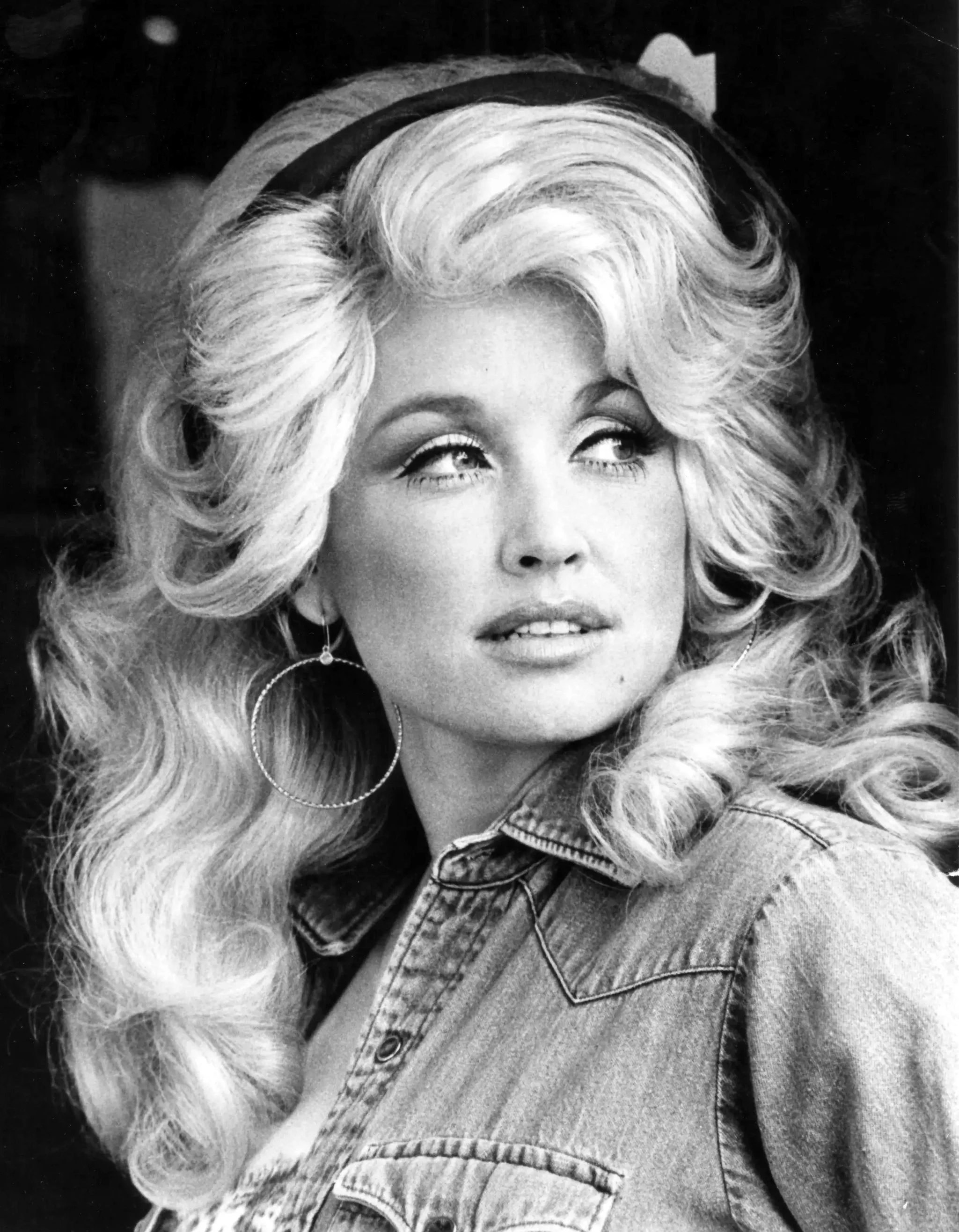
While fall doesn’t begin until Sept. 22, the last days of August and the early ones of September have always marked the unofficial end of summer. This year, they’ve given us a chance to consider many different kinds of leave-taking, none more prominent than Dolly Parton’s.
When people die, their mythologizing begins. Perhaps that’s why we say it isn’t polite to speak ill of the dead. In Parton’s case, that admonition is easy to observe. All the love she gave has returned to her. Indeed, it never left her. Love is unique in that regard. The more you give, the more remains. You can’t say that about time, power or money. I often think of that John Denver song, “Perhaps Love”: “And even if you lose yourself and don’t know what to do, the memory of love will see you through.”
But “even memory is not necessary for love,” Thornton Wilder noted at the end of his novel “The Bridge of San Luis Rey” in lines often quoted at funerals. (Indeed then-British Prime Minister Tony Blair invoked them at a memorial service for the British victims of 9/11 at St. Thomas Church in Manhattan on Sept. 20, 2001.) “There is a land of the living and a land of the dead, “Wilder concluded, “and the bridge is love, the only survival, the only meaning.”
When news of Parton’s death broke on the afternoon of Tuesday, Aug. 25, I had just finished watching Novak Djokovic practice in the Grandstand during Fan Week at the US Open. The PA system immediately broke into “Jolene.”
I didn’t like Djokovic early on, thinking him a punk kid. But his ascent in becoming the defining male player of his generation and maybe the finest to date coincided with one of the darkest periods of my life. And I found myself drawn to him as a kind of escape and even survival.
Now as we enter the twilight of our careers — where I have the advantage since mine is mostly intellectual — and I struggle to recapture my speaking and singing voices after a devastating bout of Covid over Christmas 2024, I’m reminded of the moment in Tennessee Williams’ “Cat on a Hot Tin Roof” when Brick, a former star athlete, explains to his bratty niece why he was drunkenly trying to run the high hurdles in the wee hours of the morning, breaking his ankle in the process: “Because I used to jump them, and people like to do what they used to do, even after they’ve stopped being able to do it….”
On Sunday, Aug. 28, Djokovic vomited a green liquid like something out of a horror movie as he lost in the first round, his body clearly no longer consistently able to do what it used to do. Would he have the elusive record 25th Slam title — or 26th or 27th — if he had just gotten the Covid shot? Maybe, maybe not. My beloved aunt who raised me always said that you’ll only have so much in this world, but that what’s yours no one can take away. There’s no reason he can’t continue playing like Gael Monfils and Stan Wawrinka, who are a year or two older.
But, of course, he is not them or me (nine Covid shots and counting), being one of the most elite athletes in the world. For his refusal to get the Covid vaccine — all to preserve a body that is deserting him anyhow, as all of ours will — as well as for eclipsing Roger Federer and Rafael Nadal, he’ll never be remembered with Parton-esque affection. Say this for him though: There are few more gracious losers. After his first-round loss, he said he did not want his chronic health problems to overshadow the fine play of opponent Mariano Navone, whom he called “a great guy.” Then he signed off on Instagram, “Forever grateful, New York.”
Right back at you.
Other leave-takings I’m less emotional about. The Duke and Duchess of Sussex’s return to England confirms what Queen Elizabeth II reportedly said about them in their “Megxit,” or departure to the United States, that they were an example of “a lost opportunity.” They could’ve remained president and vice president of the Queen’s Commonwealth Trust. But it wasn’t good enough for them, and so they left never understanding that when you leave, you forfeit any leverage. Now they’ve returned to England, the opportunity well having run dry in the former colonies, with no Hollywood-style prospects and lots of enmity. Stupid.
Just as clueless: The decision to honor fashion designer John Galliano with a Metropolitan Museum of Art Costume Institute gala and show and then force him to back out when the blowback over his anti-Semitic and anti-Asian rants — he was convicted of a hate crime in France — got too hot. Galliano is a brilliant designer. His groundbreaking tennis ball-green Chinoiserie gown for Nicole Kidman at the 1997 Oscars https://www.vogue.co.uk/article/nicole-kidman-1997-dior-oscars-dress remains my favorite Academy Award look.
Such designs, along with his drunken rants and prejudices, would’ve been a fitting subject for an exhibit and companion symposium though not for a gala. But I don’t think this was as much about Galliano or anti-Semitism as it was about the imperious will of Anna Wintour, Vogue global editorial director, Met trustee and gala empress, er, chair. She wanted pal Galliano, and she was oblivious to the tone deafness of that choice just as the Costume Institute is generally tone deaf, serving up pretentious drivel in a vain attempt to convince us that fashion, which has a primarily utilitarian function, is art, which is only about itself. Moreover, The Met made the egregious mistake of gutting its book and gift store to create the “Costume Art” galleries. (The bookstore returns — to the basement — next summer, a sad commentary on a culture that reads at a sixth-grade level. And don’t tell me all this is because the fashion shows are popular. Popularity is not necessarily quality.
The Costume Institute has its place, as does Galliano. That place, however, requires greater context (and preferably a basement location, like the one it previously occupied.)
Finally, what are we to make of a jury that left without reaching a verdict in the trial of Lindsay Clancy, the woman who murdered her three children? The defense claimed postpartum psychosis and 11 jurors thought that was enough for reasonable doubt, but the 12th — a male, no surprise — held out for a guilty verdict. (According to the foreperson, this juror refused to apply the standard of reasonable doubt.)
Clancy took three lives, a leave-taking she can never redress. But she was also in the grips of a mental illness exacerbated rather than assuaged by all the drugs she was taking. And the presence of a work-at-home husband and a part-time nanny doesn’t suggest she had lots of help, as the prosecution would have it, but rather that she was so anguished that she strangled her kids and then crippled herself in a suicide attempt despite what looked like help. Unless you’ve witnessed mental illness, you cannot imagine what it does to a person, but in a nutshell, it unmoors him or her — totally, completely, utterly. It can’t be explained. It’s not rational. And it may never be correctable.
One thing that can be corrected — a flawed jury system that wastes workers’ time and taxpayer money on people who seek to make an emotional argument in fraught cases when an intellectual one is needed. We don’t need a “jury of our peers.” They rarely are. We have professional armed forces. We need professional jurors who can be trained to be objective and follow a judge’s instructions.