Women have long been second-class citizens, but you’d have to admit that even by the world’s shameful standards, we’ve hit a new low in the United States. It’s not even the revelations of the #MeToo movement, the fallout from the Dobbs decision and the scandal of the Epstein files.
I’m talking about the last few weeks. First, we had the Cornell University gang rape case and now the Vivek Ramaswamy ad in which his opponent’s mother, Donna Arthur, accuses her daughter, Ohio Democratic gubernatorial candidate Amy Acton, of being a liar. The infamous backstory to this is that Acton was raped by her stepfather, Cletus “Bud” Arthur, who was arrested and indicted on child rape charges. Acton and her brother were removed from the parental home. Their stepfather jumped bail and fled the state with his wife, who chose that husband over the safety of her children. (In a moment designed to damn Acton as manipulative, Donna Arthur has said that her daughter got the idea of claiming rape from her stepsister, a child of Cletus Arthur’s first marriage, which actually suggests that his abuse of Donna Arthur’s children wasn’t his first attempt at depravity.)
In the ad, Donna Arthur appears to be a befuddled old lady. This is not to suggest that she deserves our sympathy — although there could be a kind of elder exploitation at play here — only that denial appears to be a strong part of her character. And sad to say but there have always been women who have chosen the family breadwinner over the kids who rock the boat of seeming familial bliss. Such is the power dynamic of a world culture in which women have for millennia had no financial and emotional — the two go hand in hand — independence.
But what is Ramaswamy’s excuse, and that of President Donald J. Trump and Vice President JD Vance, in doubling down on the ad? If the situation were reverse and Acton were a Republican and Ramaswamy a Democrat, would Trump and Vance be defending the ad? Is tribalism now so engrained that we can no longer see ourselves in others, others in ourselves?
Rape, of course, goes beyond politics, although both are about power. (See Susan Brownmiller’s 1975 book “Against Our Will: Men, Women and Rape.”) It’s the crime no one wants to believe. A child like Acton was “tells a story.” A woman like Cornell’s Jane Doe makes some foolish choices, including a drug-addled threesome at a fraternity house that leads to an invitation to gang rape while she’s passed out — and passed around.
Even in fictional settings involving only men, readers and viewers have trouble believing what they are encountering. In AMC’s June presentation of “The Vampire Lestat,” some viewers couldn’t understand that the title character was raped, an act that is crucial to “The Vampire Chronicles” series, even though it’s clear in author Anne Rice’s development of the character as a figure of trauma and transcendence and is depicted in the TV series with graphic violence.
Rape is an equal opportunist. It doesn’t care what sex you are or whether you’re a particularly good person, while nonetheless putting an undue onus on the character of the victim. Is it any wonder, then, that many victims are reluctant to come forward? When they do, they’re often treated with suspicion, reinforcing their initial choice to be silent.
Where does this leave men and women? For women, it reinforces the idea that they need to achieve emotional and financial independence while at the same time ensuring a certain measure of invulnerability. (There’s no way to rape-proof your life, but you can try to avoid situations that would find you outflanked.)
For men, rape presents a little considered problem, for as Kate Manne, a professor of philosophy at Cornell University, argues in a New York Times guest essay, gang rape like the one that allegedly occurred at her school is a way in which men can bond with one another. If that’s the case, then, it’s also a way in which men exert dominance over one another. (See rape in wartime.)
So rape, about power, is not just about power over women but about power over other men, through women. (Though not about rape, the Neil LaBute play “In the Company of Men” explores a similar dynamic.)
This realization is not lost on many men, who are often among the loudest voices in condemning rape. That’s not just because they have mothers, wives, sisters, daughters and girlfriends. It’s because rape strikes as the heart of how they see themselves as noble, protective human beings.
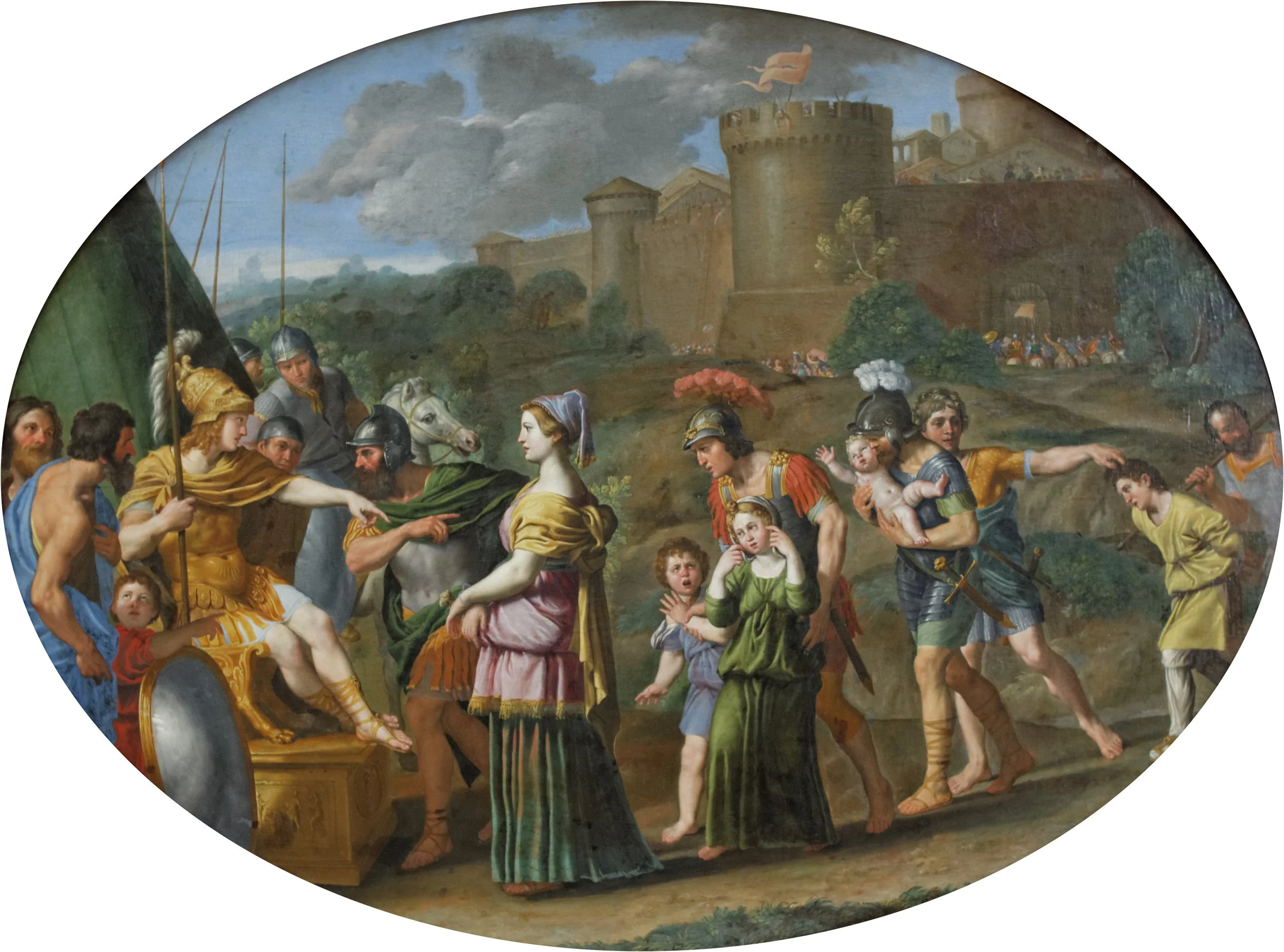
In his “Life of Alexander,” Plutarch tells the story of Timoclea, a Theban noblewoman raped by one of Alexander the Great’s Thracian captains, who then proceeded to rob her. As he leaned over the well where she told him her valuables were kept, she pushed him in, killing him. Far from condemning her when she was brought before him, Alexander set her and her children free. Why? Because he understood, as the Trump Administration does not, that rape is never only about the rape of a woman. It’s about the rape of society.