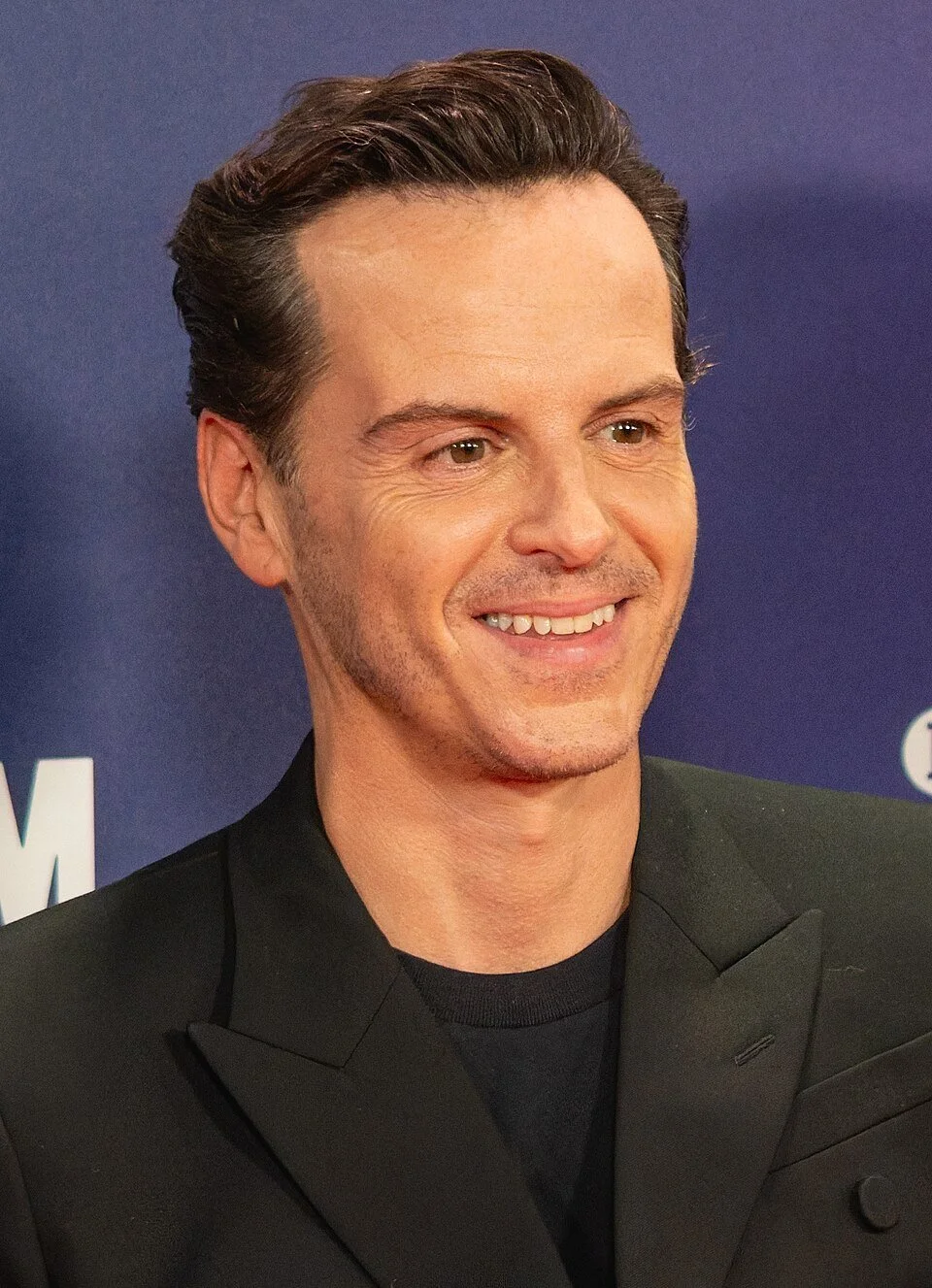
We’re in a “Hamlet” moment, with the 2025 films “Hamnet,” offering a backstory to William Shakespeare’s creation, and an Indian-centered version with Riz Ahmed in the title role. But the best may be yet to come with “Elsinore,” bowing only in theaters Nov. 20, with Andrew Scott of “Sherlock” and “Ripley” fame playing Ian Charleson, the “Chariots of Fire” star who took on the Danish prince in 1989 as he was dying of AIDS.
The film is already generating Oscar buzz for Scott’s interpretation of Charleson playing the part, which judging from the trailer is vastly different from his own acclaimed 2017 interpretation of Hamlet. I’ll have a full review of “Elsinore” after its premiere — as a collector of “Hamlets,” my favorite play, I can’t wait — but here I’m more interested in what a revisit of Charleson’s Hamlet says about fame, accomplishment, AIDS and our own time.
Charleson, who came to my attention when he played Alexander the Great’s soulmate Hephaistion in the 1981 PBS series “The Search for Alexander the Great,” might not have gotten the chance to play Hamlet at London’s National Theatre in 1989 had Daniel Day-Lewis not been such a famously intense Method actor. During a performance as the Melancholy Dane, Day-Lewis — already a movie star tiring of theater work — broke down during the scene in which Hamlet first encounters his father’s Ghost, identifying it too closely with his own late father, the poet Cecil Day-Lewis, with whom he had a loving but complex relationship.
The play shut down only to reopen with Charleson — who had played Hamlet in a Cambridge Theatre Company production in 1974 and had been doing sterling work at the National in “Guys and Dolls,” “Fool for Love” and “Cat on a Hot Tin Roof” — as a revelatory Danish prince, lauded for a performance that combined elegance and power, simplicity and clarity with brilliance. (Some 28 years after Charleson’s National Theatre Hamlet, Scott’s Almeida Theatre Hamlet would be acclaimed for a spontaneous, organic approach to the role, as if the lines and soliloquys had just come to him.)
But Charleson was locked in an offstage drama of his own. Few knew that the closeted gay actor was dying of AIDS.
For those of us who covered the early days of the AIDS crisis, it would be hard to overstate how terrifying that time was, with governments like the United States’ adopting a head-in-the-sand approach and medical progress in fits and starts until a cocktail of drugs created in the mid-90s made it a chronic rather than a fatal illness.
Even so, more than 42 million have died of AIDS, with almost as many living with HIV, two-thirds of them in sub-Saharan Africa, where it is mostly a heterosexual disease. Its disproportionate effect on the gay community in the U.S., its treatable status now and the Trump Administration’s gutting of foreign support have made AIDS a largely forgotten challenge. (Witness the U.S. President's Emergency Plan for AIDS Relief (PEPFAR), created in 2003 by President George W. Bush, which has undergone restructuring, funding freezes and policy shifts under the Trump Administration.)
Perhaps one reason that “Hamlet” has returned to us now in various guises is that the play is in part about a man up against the corruption of power in his own homeland, the famous “something’s rotten in the state of Denmark.” (The title “Elsinore” refers to the castle where Hamlet is tasked with unraveling that corruption as well as the formidability of the National.)
But “Hamlet” is also a play that calls on us to rethink the way we see the world and ourselves. Though Charleson had starred in “Chariots of Fire” and appeared in “Gandhi” — the “Elsinore” trailer has fun with “Chariots” being mainly remembered for its Vangelis score — his film career had largely stalled in the 1980s. And yet, if it hadn’t, would he have done the work he did at the National? Was he less successful than Day-Lewis — the only three-time Best Actor Oscar winner, who never again appeared in a play — or was his success merely different?
Similarly, Scott is only now coming into leading man status. Does that make his career less worthy? I think if Charleson’s life and “Hamlet” offer anything on this score, it is this: Everything in its own season. Everyone in his or her own time. All that really matters is that you pursue your passions however you can, that you live your life and contribute to society to the extent that you can — even if you’re dying, as dying is part of living.
Charleson’s life was short. He died at 40, two months after taking on “Hamlet” at the National, but he did so having ascended acting’s Everest.
As Hamlet himself would say, “the readiness is all.”