In a not-very-good but nonetheless watchable 1998 film of Alexandre Dumas”The Man in the Iron Mask” that capitalized on the Taylor Swift-like phenomenon of then teen heartthrob Leonardo DiCaprio, Jeremy Irons’ Musketeer Aramis tells DiCaprio’s hapless title character that the greatest mystery in life is who we are.
Who are we? Who are you? We receive names and unique Social Security numbers at birth, pose for endless selfies, research our digital DNA data and generally live in a “me” culture, branded and monogrammed. But who are we really? What are our values? What are the strengths and weaknesses of our personalities?
Dying in an effort to aid a woman under attack by federal agents in Minneapolis, Alex Pretti demonstrated who he was — a compassionate nurse in an ICU unit at a veterans’ hospital. But why has his death led to congressional investigations and ultimately the removal of ICE and U.S. Border Patrol from that city? Why didn’t Renee Good’s death provoke similar outrage?
Perhaps because Pretti’s death was the second, or he wasn’t in a vehicle that could — or could not — be immediately weaponized.
But Pretti was something Good was not — a White man and a legal gun owner. Indeed, he was what we like to think the alpha white male is, as seen in countless movies and TV series, retold in countless stories of George Washington and Abraham Lincoln on Presidents’ Day — strong but gentle, defending truth and the vulnerable.
For once, MAGA saw not a Black man (George Floyd in 2020) on the ground, kneed by a White cop; or a lesbian mom in an SUV (Good); or a 5-year-old Hispanic boy in a blue bunny hat being carted off to detention in Texas, (Liam Ramos). They saw their gun-toting,veteran-supporting alpha male selves.
In his stunning book, “Thoughts on Solitude” (Shambala, 1993,) Trappist monk Thomas Merton writes: “We cannot see things in perspective until we cease to hug them to our own bosom. When we let go of them, we begin to appreciate them as they really are. Only then can we begin to see God in them. Not until we find Him in them can we start on the road of dark contemplation at whose end we shall be able to find them in Him.”
Would that MAGA would see others and the Other in themselves so they could start on Merton’s dark road of contemplation in which they could see themselves in the Other.
They certainly didn’t see themselves in Grammy Award-winning Puerto Rican Bad Bunny’s Super Bowl Halftime Show. On and on criticizing a performance in Spanish that was only innocuously political (the Western Hemisphere is made up of the Americas — seriously, that’s controversial?); and mostly featured Broadway-style, salsa-flavored entertainment, along with Ricky Martin and Lady Gaga, in an exploration of a day in the life of Puerto Rico, part of the United States. Call it Lin-Manuel Miranda lite.
If you study singing, as I have as a lyric coloratura, or attend many concerts or operas, as I have as an arts critic, you are going to learn and hear singing in many languages. (I myself have sung in nine.) A singer always begins with the words and their pronunciation and phrasing, then the melody, rhythm and dynamics that will convey the narrative and emotion of the piece. If the singer does his or her job, you’ll get the gist.
And it may open you to the study of languages or a language as the gateway to other cultures, other ways of thinking and especially brain health. True, English is the primary language of the United States, and we should all learn to read, write and speak it correctly in school, work and our general lives. But there is nothing wrong with this country learning Spanish and French at least, the other languages of colonial North America, while also celebrating the languages. of the native peoples and immigrants.
In Queens alone, residents speak 800 languages, the most in any one place on the face of the earth I have often told the story of two New York City police officers listening to men talking about bombing a subway train. They approached the men and said, “We speak Farsi. And you’re under arrest.” Remember the Navaho code talkers in World War II? Knowing another language can save your life. My French certainly came in handy when I got sick at the Archbasilica of St. John Lateran in Rome, and the doctors in the infirmary there spoke French.
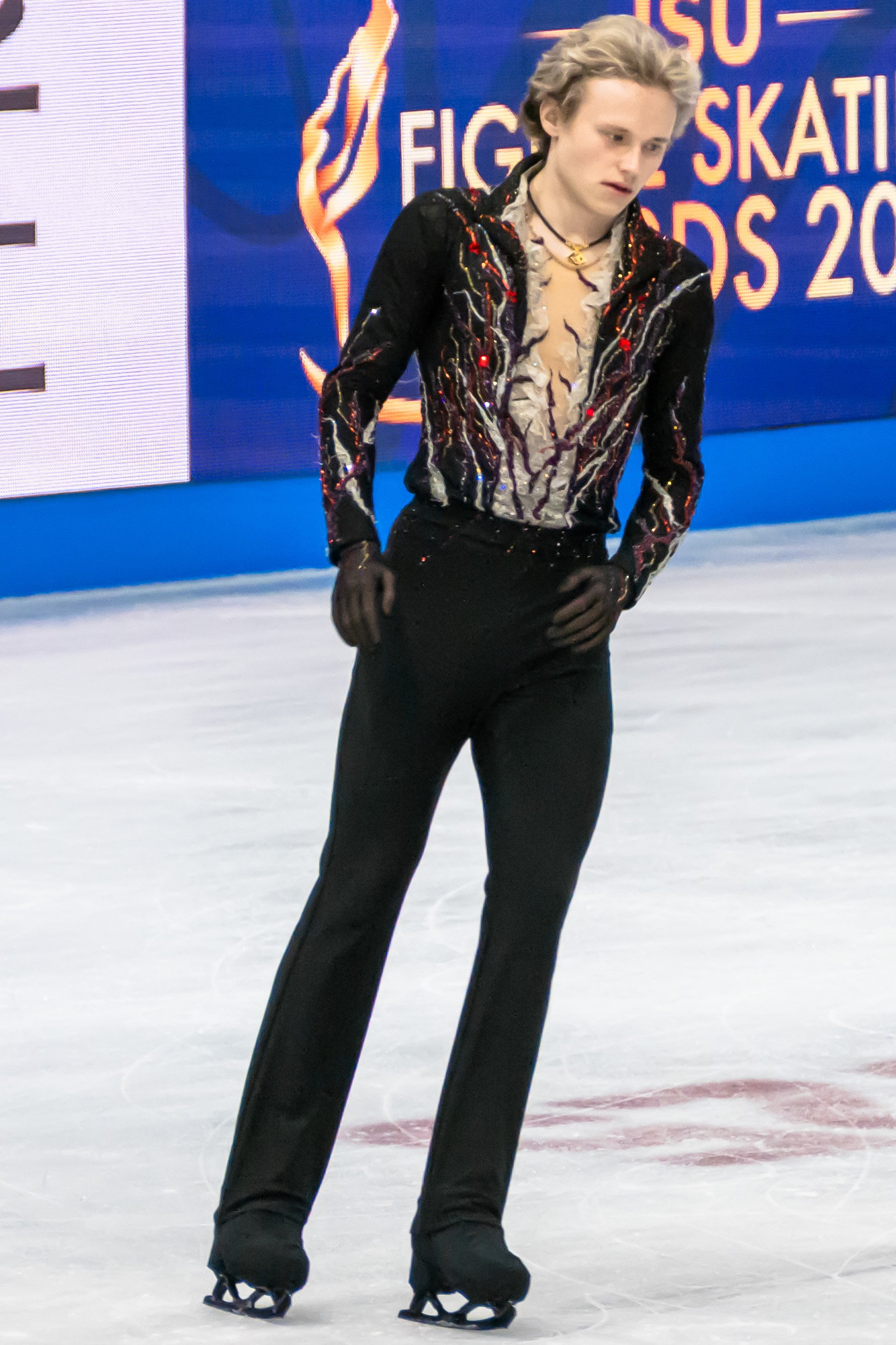
The poster boy for the overachieving all-American guy — but also the child of former Soviet skaters — figure skater Ilia Malinin grew up in Vienna, Virginia, speaking Russian as well as English. Blond and beautiful with a leonine mass of hair, he looks like an Apollo or Alexander the Great come to life. The “Quad God” — a nickname bestowed by others but one that he wore on a practice shirt — was going to do what no man hand done before in Olympic competition, land multiple quads, including the quad axle of four and a half rotations in the air. The media, his sponsors, the advertisers, the experts all said he was “expected to cruise” to the gold medal, a great phrase in a New York Times article that encapsulates the presumptions and presumptuousness of this story.
You know the rest. Malinin flamed out — more Icarus than Apollo. It happens. Athletes are human, like the rest of us. And we are all more than our worst day, more than our image, as this fan of the New York Yankees, Ryan Lochte and Novak Djokovic can tell you.
But in our humanity, perhaps we need more humility — knowing our strengths as well as weaknesses. We need to damp down the hype that puts such crushing pressure on these young athletes’ daily lives for a few minutes on the ice or the slopes every four years. But that won’t happen, because of the great money involved.
Pressure is part of life. Malinin will learn to deal with it on the Olympic stage. He is capable of anger and grace. We saw both. Anger successfully if imperfectly fueled his performance in the free skate of the team competition for the gold medal. Grace propelled him to hug the surprise gold medalist in the men’s competition, Kazakhstan’s Mikhail Shaidorov. It was the nation’s first-ever gold in Olympic figure skating. It’s good to see others do well as it enlarges our lives rather than diminishing them.
As for Malinin, we will see him in the Olympic figure skating exhibition on Saturday, Feb. 21, and he will compete in the world championships March 23 through 29. In adversity and endurance, we truly know ourselves. We now know who he is.