On May 4, The Metropolitan Museum of Art’s Costume Institute in Manhattan inaugurated its new Costume Art galleries in the space once occupied by The Met’s late, lamented book and gift shop. (The shop, relocating to the lower level, will open next summer.)
This tells you everything you need to know about American culture in the digital age: We are a visual society, and I don’t mean that in the sense of deconstructing a Van Gogh. I mean that in the sense of the iPhone, TikTok and Instagram, here’s an influencer with a fabulous piece of Moissanite jewelry; here’s a recipe for scrumptious blueberry muffins; here’s a dress that looks gold in one light and blue in another, blah, blah, blah, blah, blah.
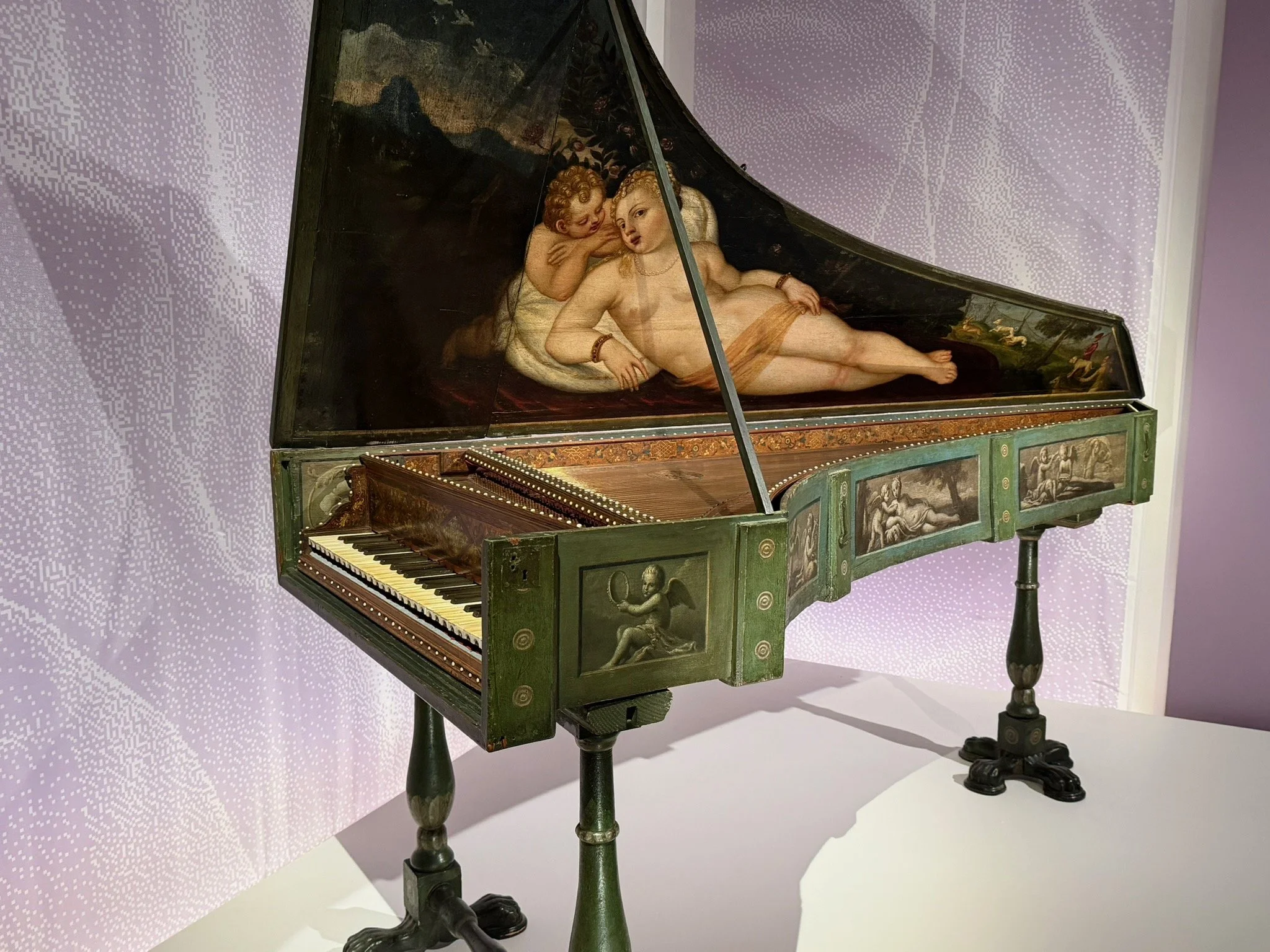
Scenting the wind, The Met has tried to relate to the younger, digital generation by marrying its collections to populist subjects like fashion. Sometimes this works brilliantly, as in the ingenious “Musical Bodies” exhibit (through Sept. 27), in which the museum explores the relationship between musical instruments and the human form, particularly the female body. I haven’t had time yet to see “Giacometti in the Temple of Dendur” (through Sept. 8) in person, but here again we have a real idea, the relationship between Modernist Alberto Giacometti’s spare, angular figures and materials and those of ancient Egypt.
Costume “art,” however, is a misnomer and an oxymoron. Fashion is not art, which is only about itself. Vincent van Gogh may have created sunflower paintings to grace the Yellow House for Paul Gauguin’s visit - yearning for friendship like one of those flowers reaching for the sun, but the paintings’ meaning, purpose — to be themselves — is not dependent on any use. Whereas couture, clothes, call it what you will, is always about covering, or uncovering, the body.
Art, also, always offers psychological truth. Whereas fashion is by its nature deceptive, designed to arm and often disguise. And then there is the self-deception. Portentous music made of about three notes — we’re not talking the score for “The Whale” here — wafts through galleries paired with actual works of art and clothing that seems to have been inspired by them, like a Greek vase and a Grecian goddess gown. But that just proves the point, doesn’t it? Just because the clothing is inspired by art, doesn’t make it art in itself and it doesn’t make the wearer a goddess.
Then there are galleries filled with disabled mannequins, pregnant mannequins, full-figured mannequins, often clothed only in black ribbons. What are we to make of that? And how many people who attend the annual Met Gala are anything other than tall, thin and conventionally good-looking, making such inclusiveness seem like lip service.
Contrast the confounding nakedness of the mannequins here with the nudity of Titian’s “Venus and the Lute Player” (circa 1565-70, oil on canvas), which accompanies an Alessandro Trasuntino harpsichord in “Musical Bodies” that is decorated with a 1531 Venus painting by Titian and Paris Bardone. I learned more about the body — its beauty, joys, lust, loneliness and sorrows — in five minutes looking at the painting than in the half-hour I spent wandering around the Costume Art galleries.
And the Titian work reminded me of everything I loved about art, my career covering it, being a woman, being alive. That’s what great art can do.
Look, clothes can be aesthetic, well-crafted, historical, even satisfying. But their purpose isn’t to be only themselves. And they have no idea that you can’t absorb in a few seconds. Whereas you can always go back to a work of art for new insight as I did with the Titian.
Ironically enough, the very weekend I saw these shows (June 28-29) was the closing weekend of “Raphael: Sublime Poetry,” an exhibit of the Renaissance master’s rare, ravishing, rapturous works. The line to get in, snaking throughout the building and often stopping other foot traffic, would’ve made President Donald J. Trump, he of (crowd) size matters, emerald with envy.
Here was truth and beauty, Madonnas and Baby Jesuses that showed off not only Raphael’s exquisite line and delicate palette but his psychological insight, Baby Jesus tugging at the Virgin Mary’s neckline like a real baby clutching at his mother’s dress.
Over three months, the show drew more than 562,000 visitors, an average of 6,800 a day. It was also among the museum’s most visited shows of the past 10 years, behind only two others — “Michelangelo: Divine Draftsman and Designer” (2017–18) and The Costume Institute’s “Heavenly Bodies: Fashion and the Catholic Imagination” (2018). The latter — spanning The Met and The Cloisters, its medieval wing in northern Manhattan’s Fort Tryon Park — was a transcendent show in part because it had a great theme, the Roman Catholic Church’s effect on culture, often conveyed in moving, cinematic tableaux in which fashion wasn’t the only star.
“Raphael” proved that people are hungry for great, meaty art history and that you don’t necessarily have to meet people where they are in the morally and culturally bankrupt digital age.
Sometimes it’s better to invite them into a world that has stood the test of time.