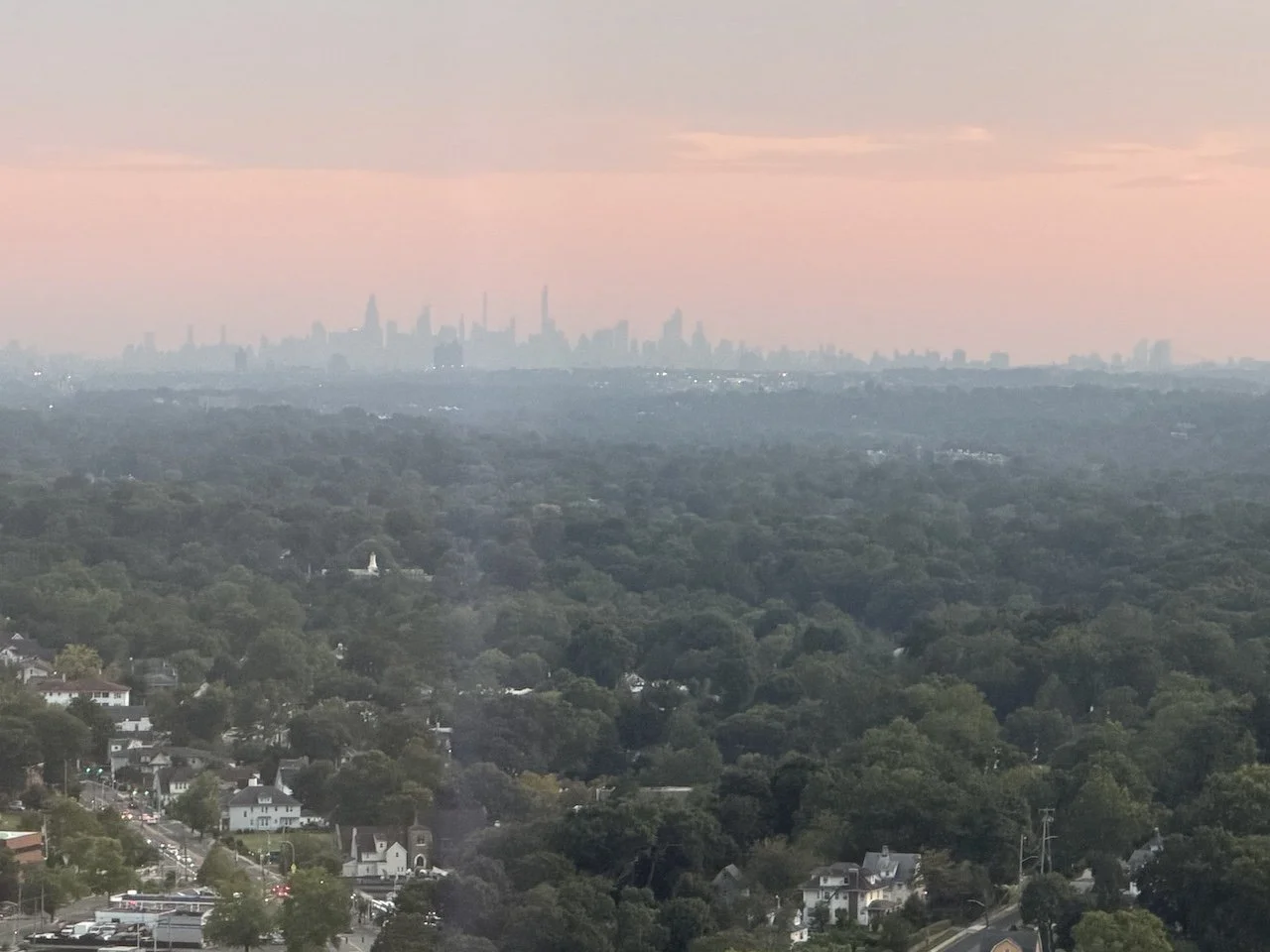
It was a beautiful day: That’s the first thing that anyone who experienced Sept. 11, 2001, will tell you about it. It was a beautiful day, what the pilots call “severe clear.” It had to be, because the terrorists who used those planes to bomb the World Trade Center and the Pentagon and who were foiled in Shanksville, Pennsylvania, didn’t really know how to fly that well. So the weather had to be good, “a seamless sky,” as I later titled one of my novels, whose centerpiece takes place on that day.
How best to remember it, 25 years later? At first, I thought I would write about the day itself and all that I had witnessed. But lover of history though I am, I realized that I had done that before and had no desire to do so again. Instead, I would rather focus here on 9/11/2026 and the future.
Whenever people ask me about New York, my home, I always tell them that on a day that showed the worst of humanity, New Yorkers gave the best, acting with courage and without regret. Others around the world did so as well and have done so again now.
But this 9/11, we’ve also seen the Luciferean pride and wrath that propelled Osama bin Laden. Look at the demonizing of the Democrats at the Republican Midterm Convention. Vice President JD Vance spoke of the Democrats’ hatred. But what of his own, this from a man who stood at the former Ground Zero and saw firsthand what hatred is capable of? This from a Roman Catholic, who must’ve heard Jesus tell Peter in the Gospel reading for today, Sunday, Sept. 13, that you must forgive others not seven times, but 77 times — a metaphor for the end of keeping score in the dispensation of mercy.
What of those 9/11 family members who lost so much and yet could sign a petition to keep New York City Mayor Zohran Mamdani from the ceremony, because he’s a Muslim? Did he bring down those buildings? Did no Muslim die on 9/11 or condemn the attacks? Or rather did Mamdani, in keeping with the precepts of his faith and his duties, focus on the 9/11 victims, families and first responders, staying until every last name was read at the city’s ceremony, the only politician to do so? That’s leadership.
But beyond 9/11: What’s with the endless hate? Megyn Kelly and Meghan McCain going on and on about Meghan Markle, Duchess of Sussex?.(Too many Megans in that toxic broth.) I would agree with what Queen Elizabeth II reportedly said of her grandson, Prince Harry, and wife Meghan, that they represented a “lost opportunity.” But why hate them? (I’m sure the queen, a woman who famously remarked on 9/11 that “grief is the price we pay for love,” didn’t hate her grandson and his wife.) Do we know what’s really in the Sussexes’ hearts? And if they are now seeking that lost horizon in moving back to England, aren’t they more to be pitied, if anything, than hated?
The same for Lindsay Clancy: She killed her children, and she’s paralyzed herself both literally and metaphorically. She can be helped mentally and at the same time held accountable. But where does hatred of her improve the situation? Does it bring her children back or make her whole?
Or is this just about a bunch of podcasters and social media scribes feeling better about themselves, or worse, making money by ginning up hatred?
On 9/11/26, we saw pockets of grace amid the usual digital rancor. Rudolph Giuliani, who embodied Churchillian courage as New York City mayor on 9/11, told Mamdani that he would pray for him, because being mayor is a tough job — this after he called for the mayor not to attend. And when the right-wing media tried to suggest that Mamdani and Representative Alexandria Ocasio-Cortez were laughing at the ceremony, ex-Giuliani aide Michael Ragusa refuted that and said he was tired of all the partisan lies.
As we should all be. In electing Mamdani, New York demonstrated that its healing has come full circle. Lower Manhattan, ravaged that day, has risen from its ashes. Gustavo Dudamel, former music director of the Los Angeles Philharmonic, has assumed the same position at the New York Philharmonic, because New York — a city that has been burned and bombed throughout its history — is still the place of reinvention and possibility, where people come to test themselves in the marketplace, yes, but also as 9/11 demonstrated, in their own souls.
We are the richest, most powerful nation on earth. We can afford to be big. And even if we weren’t, we can always afford to love even if we have no love, to go on “loving in the void,” as the French mystic and philosopher Simone Weil said.
We don’t have to have empathy. Maybe we can’t feel another’s pain and maybe we shouldn’t, particularly if we want to help. But we can understand and offer aid in whatever way we can.
We can be compassionate. The question is, Do we have the courage to do so?