OK, so who had Pope Leo XIV versus President Donald J. Trump on their fight card, let alone bingo card?
Today, many shocked posters on the internet are saying they didn’t. But I did.
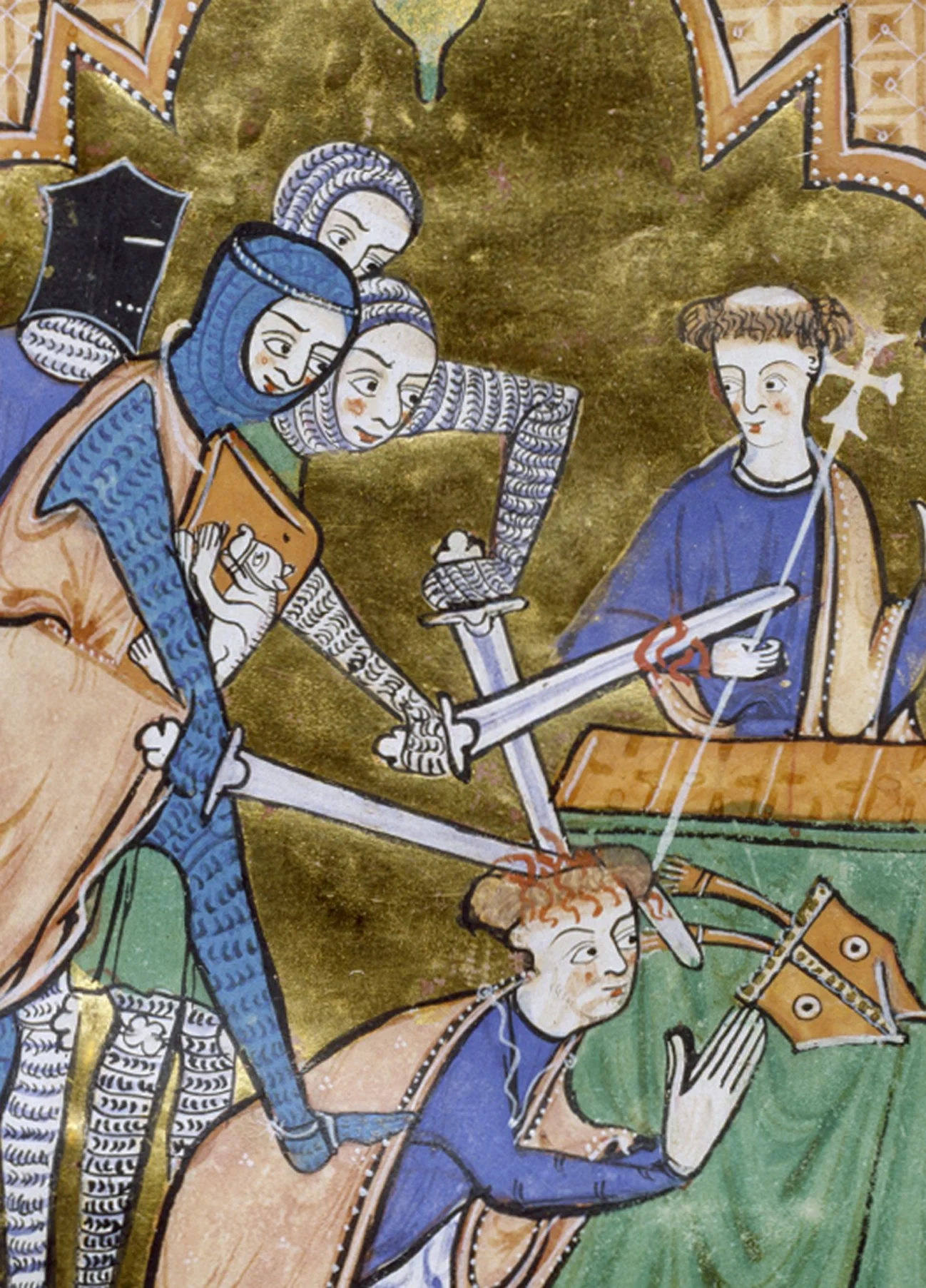
Read MoreA depiction of the murder of St. Thomas Becket by knights of his friend King Henry II of England. From the Carrow Psalter, 1250, ink, gold and parchment. Courtesy Walters Art Museum.
OK, so who had Pope Leo XIV versus President Donald J. Trump on their fight card, let alone bingo card?
Today, many shocked posters on the internet are saying they didn’t. But I did.
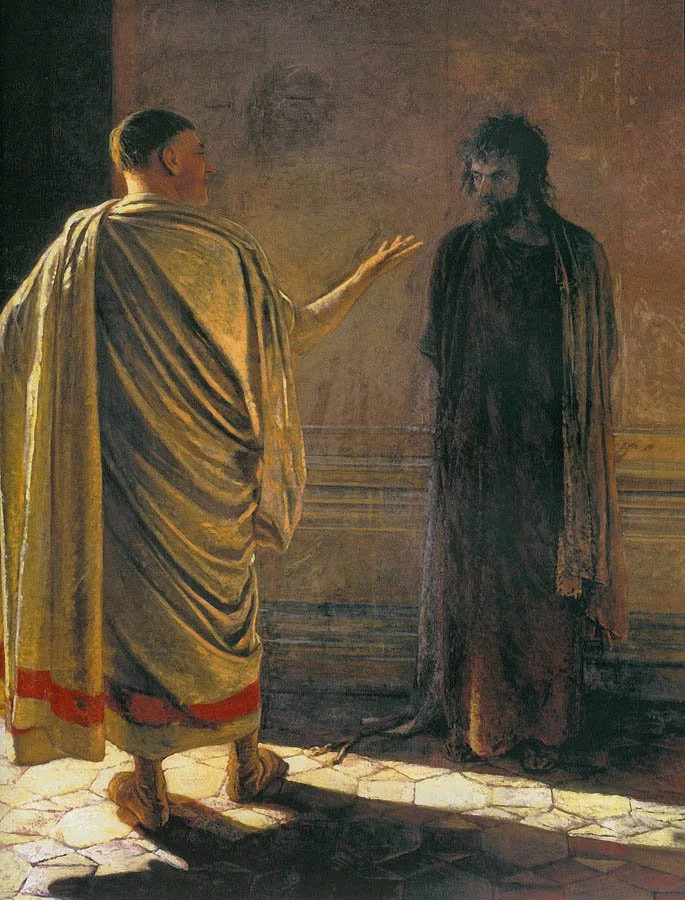
Read MoreNikolai Ge’s “What is Truth?” (1890) crystallizes the biblical encounter between Pontius Pilate and Jesus, between military might and spiritual transcendence.
Sometimes you can say the right thing – the “true” thing – and still be wrong.
So we have Israeli Prime Minister Benjamin Netanyahu on the limits of Jesus Christ and actor Timothée Chalamet on the limits of ballet and opera. Both offered a realistic assessment of the world as it is. But both failed to see the world beyond its limitations.
Read more…
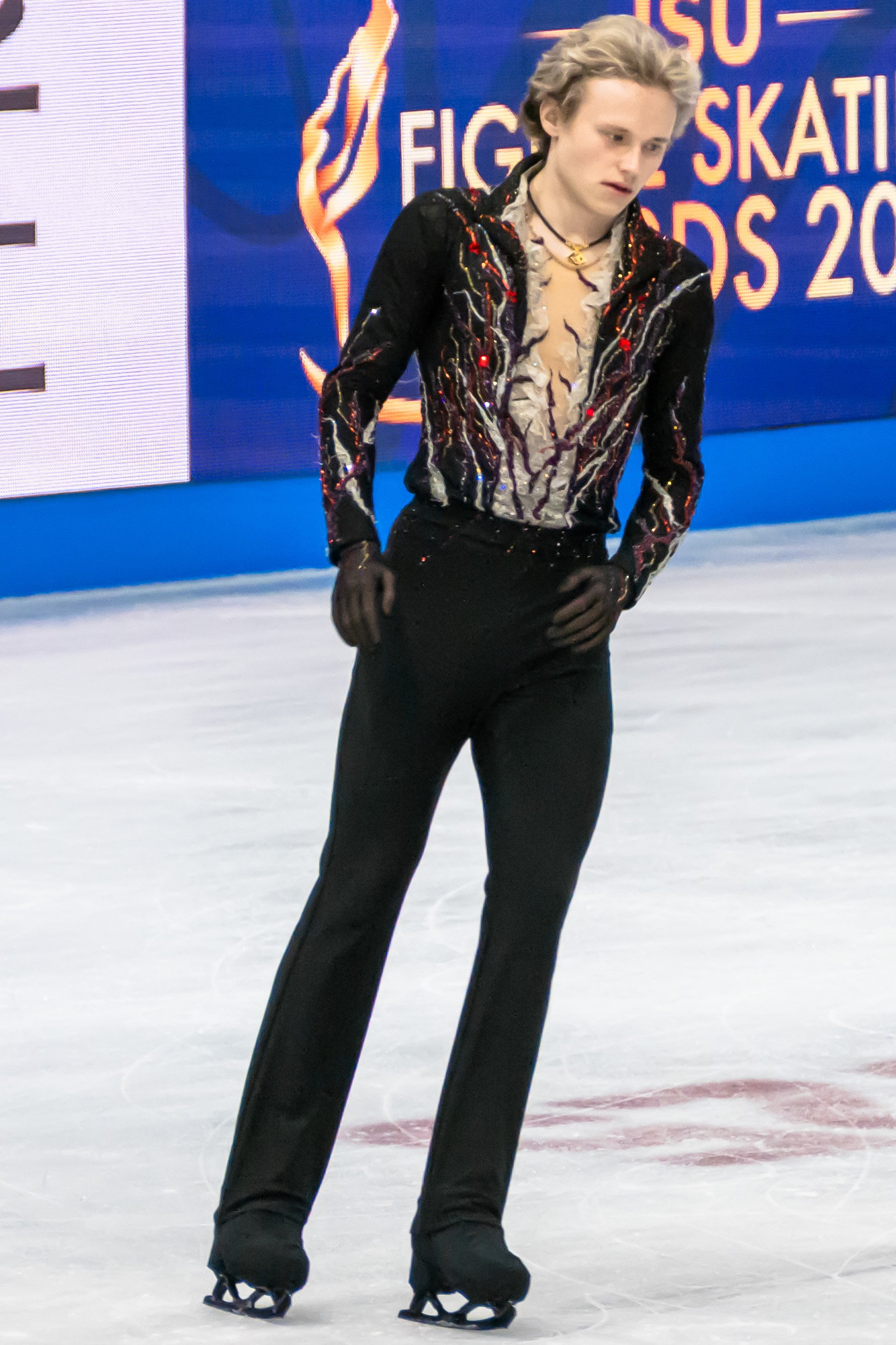
Read MoreIlia Malinin before the free skate of the 2025 World Figure Skating Championships. Courtesy
FloweringDagwood/Wikipedia.
In a not-very-good but nonetheless watchable 1998 film of Alexandre Dumas”The Man in the Iron Mask” that capitalized on the Taylor Swift-like phenomenon of then teen heartthrob Leonardo DiCaprio, Jeremy Irons’ Musketeer Aramis tells DiCaprio’s hapless title character that the greatest mystery in life is who we are.
Who are we? Who are you? We receive names and unique Social Security numbers at birth, pose for endless selfies, research our digital DNA data and generally live in a “me” culture, branded and monogrammed. But who are we really? What are our values? What are the strengths and weaknesses of our personalities?
Read MoreJohn Everett Millais’ “Ophelia” (circa 1851, oil on canvas), for which the artist and poet Elizabeth Siddall posed, helped inspire Taylor Swift’s “The Fate of Ophelia. Courtesy the Tate Britain.
Why does a billionaire feminist continue to write songs about being rescued from towers by men who “were just honing their powers”?
Read MoreWilliam-Adolphe Bouguereau’s “Orestes Pursued by the Furies” (1862, oil on canvas), Chrysler Museum of Art.
Well, that didn’t last long but perhaps longer than we thought it would.
Actually, Elon Musk was only slated to have a six-month tenure at DOGE, although given the importance of groceries — remember them? — Musk’s sell-by date was always ready to be stamped.
Read MoreGala opening of the John F. Kennedy Center for the Performing Arts on Sept. 8, 1971 with members of the Kennedy family in the presidential box. From left, Rose Kennedy and Sen. Edward M.Kennedy standing. Seated far right is his first wife, Joan Kennedy. Courtesy the U.S.News & World Report Collection of the Library of Congress.
Fresh from his blitzkrieg of directives, President Donald J. Trump took a break to attend Super Bowl LIX, leaving the rest of us to consider what the past three weeks have meant.
Read MoreJohann Christian Schröder’s “The Annunciation” (circa 1690) depicts Mary’s initially troubled reaction at the news from the angel Gabriel that she was to be the mother of the Son of God. Courtesy Slovenia’s Ptuj Ormož Regional Museum
Central to the feast of Christmas, which Christians —and let’s face it, many non-Christians — will celebrate Wednesday, Dec. 25, is the story of the angel Gabriel coming to the town of Nazareth to tell the Virgin Mary that she will miraculously conceive and bear Jesus, the Son of God.
Much has been written about Mary as the new, obedient Eve — the anti-Eve, as it were — acquiescing to become the mother of God, with all the suffering his Passion will entail for her as well as him. (Think Michelangelo’s poignant “Pièta.”) And just as much has been written about so-called sacrilegious interpretations of Mary doubting this calling, (see Netflix series “Mary”); and Jungian interpretations of Mary as yet another mother in the miraculous birth narratives of famous men (see the stories of the Buddha, Alexander the Great and Augustus).
All these interpretations miss the point of the original text.
Read More