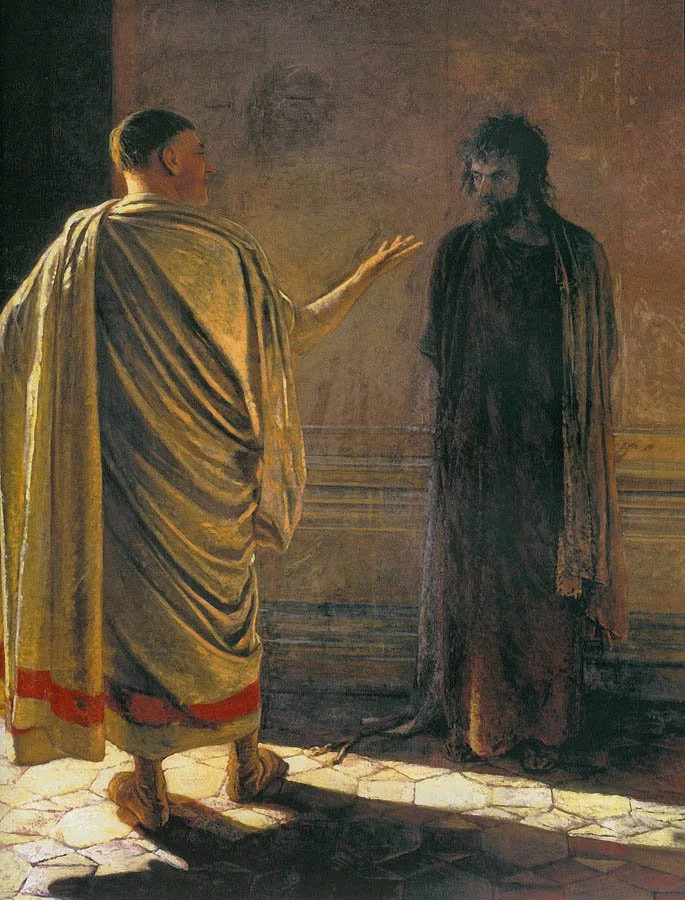
OK, so who had Pope Leo XIV versus President Donald J. Trump on their fight card, let alone bingo card?
Today, many shocked posters on the internet are saying they didn’t. But I did.
Read MoreA depiction of the murder of St. Thomas Becket by knights of his friend King Henry II of England. From the Carrow Psalter, 1250, ink, gold and parchment. Courtesy Walters Art Museum.
OK, so who had Pope Leo XIV versus President Donald J. Trump on their fight card, let alone bingo card?
Today, many shocked posters on the internet are saying they didn’t. But I did.
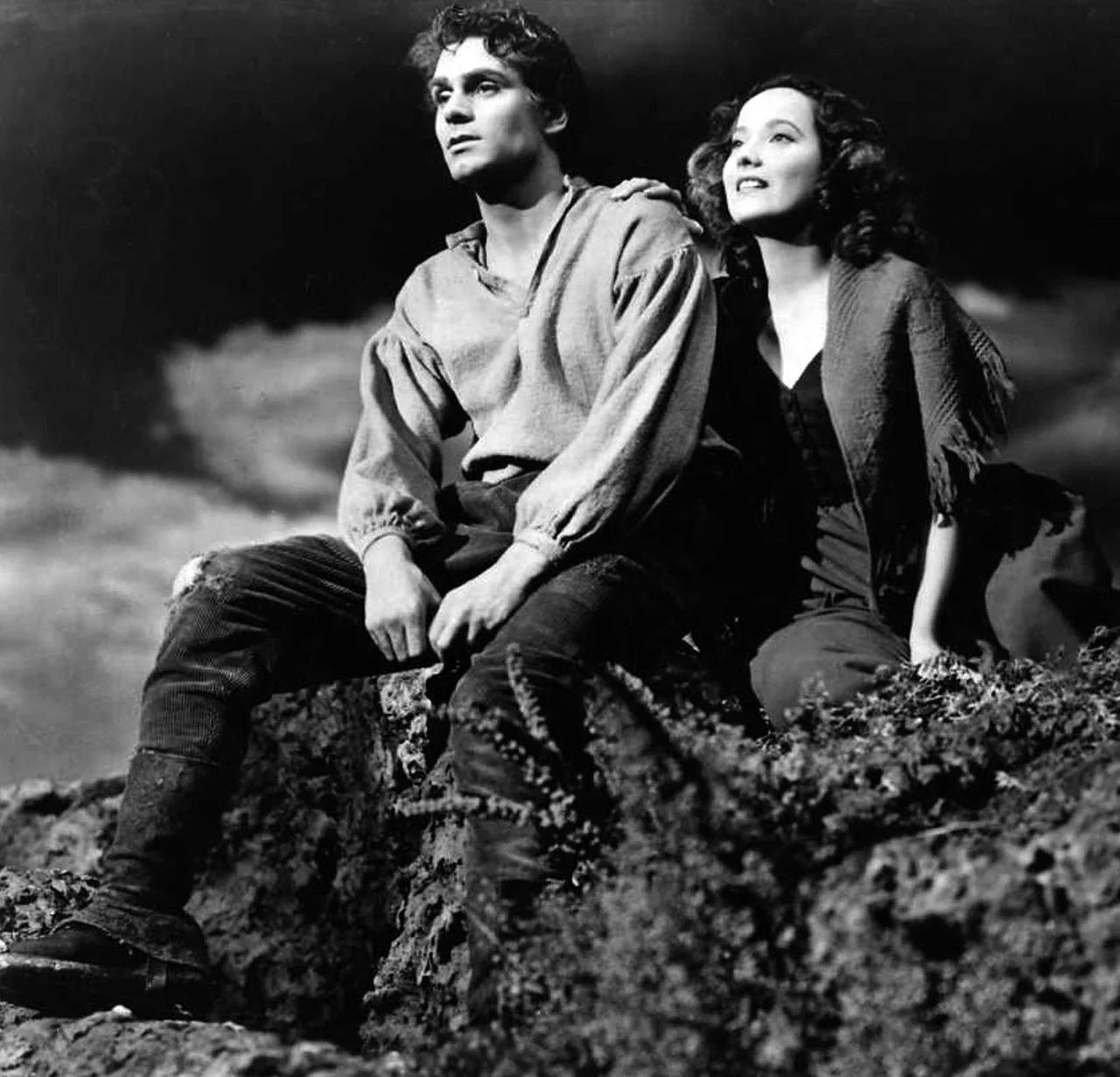
Read MoreNikolai Ge’s “What is Truth?” (1890) crystallizes the biblical encounter between Pontius Pilate and Jesus, between military might and spiritual transcendence.
Sometimes you can say the right thing – the “true” thing – and still be wrong.
So we have Israeli Prime Minister Benjamin Netanyahu on the limits of Jesus Christ and actor Timothée Chalamet on the limits of ballet and opera. Both offered a realistic assessment of the world as it is. But both failed to see the world beyond its limitations.
Read more…
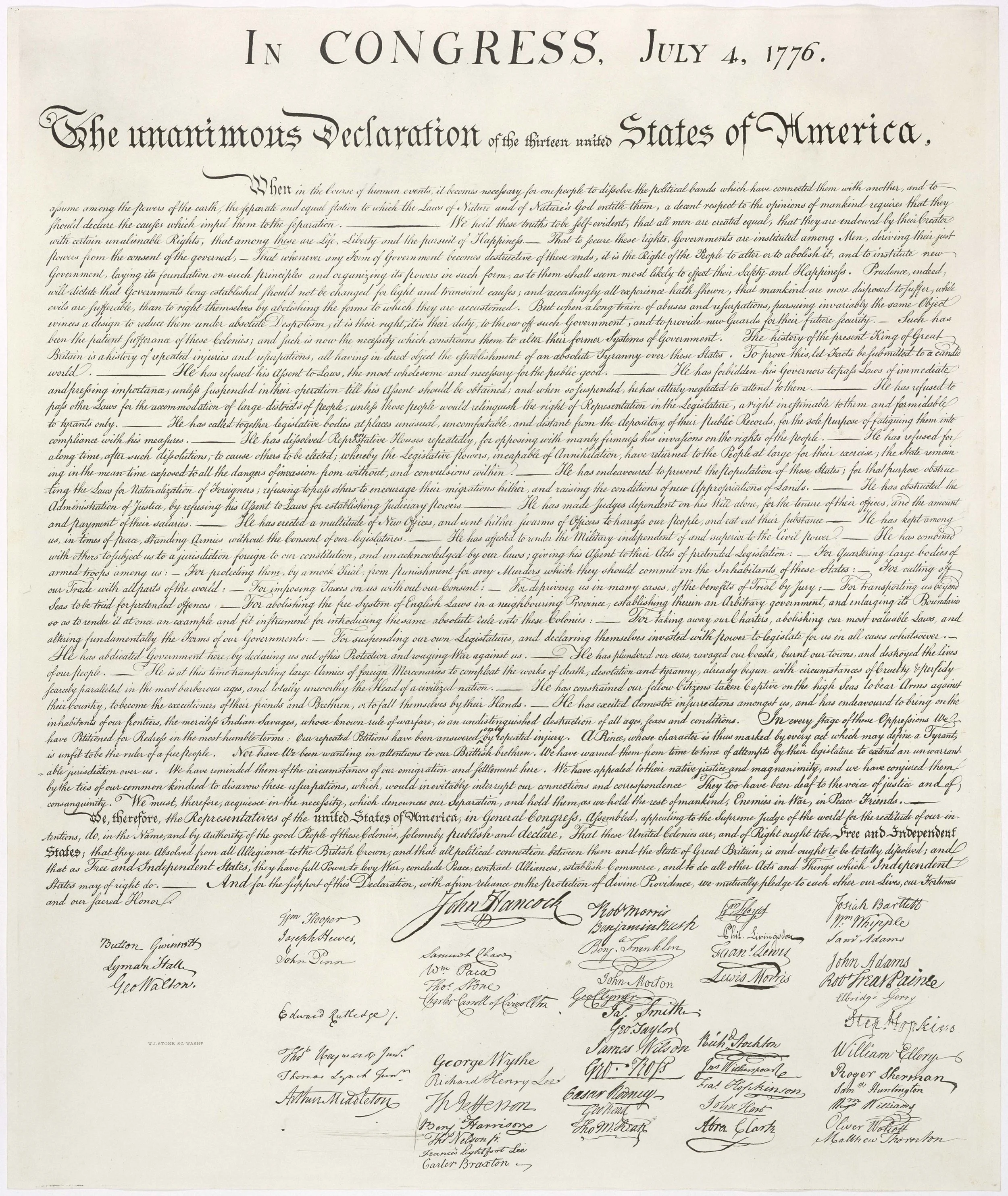
Read MoreFrom left, Laurence Olivier and Merle Oberon in the 1939 adaptation of Emily Brontë’s “Wuthering Heights,” still my favorite of the many adaptations, never more so than in this scene of the wild, rough-hewn characters on their beloved Yorkshire moors. I keep a framed copy of this movie still in my library.
As a collector of “Wuthering Heights” interpretations —Emily Brontë’s novel being the inspiration for my revenge family drama “Seamless Sky” — I was intrigued then disappointed by the announcement of a new film adaptation. I haven’t seen it, but what I have seen of it makes me think Margot Robbie is all wrong for the part of Cathy, not the least of which being that she’s a blonde.
The fair Ralph Fiennes and the French Juliette Binoche would’ve seemed all wrong for the 1992 film “Emily Brontë’s Wuthering Heights.” But they have such talent and chemistry that they are among my favorite Cathys and Healthcliffs, never more so than in their scenes on the Yorkshire moors where their perverse, almost Luciferian defiance of everything and everyone but themselves and the natural world sows the seeds for their haunting, destructive story arc.
Read MoreThe gentlemanly surrender of British Gen. John Burgoyne to Patriot Gen. Horatio Gates after the Battle of Saratoga on Oct. 16, 1777, as depicted by John Trumbull in this 1818 painting, is how we tend to think of the American Revolution after the fact — nice and stately. Instead, it was a long, brutal guerrilla conflict, and though Saratoga would prove its turning point for the Patriots, it would still drag on for six more years.
Next year marks the United States’ 250th birthday and already plans are underway for the celebration, with the nonprofit America250 Commission https://america250.org/ charged with staging different events and programs to mark the occasion. (Each of the 50 states has also created its own commission, with plenty of cultural organizations contributing exhibits and performances.)
Though ostensibly bipartisan, America250 has come under the aegis of the Trump Administration, which wants to ensure that American history is portrayed in such a way that Americans don’t feel ashamed of their past. But Ken Burns – whose “The American Revolution” aired on PBS Nov. 16 through Nov. 21 and is streaming free there through Dec. 14 – has said in interviews that we owe it to ourselves to tell the truth about the revolution and let the chips fall where they may. Far from shaming us, Burns and producing partner Sarah Botstein have said, the revolution should inspire and enlighten us as ordinary citizens overcame seemingly insurmountable odds to buck the British Empire and create the world’s oldest modern democracy.
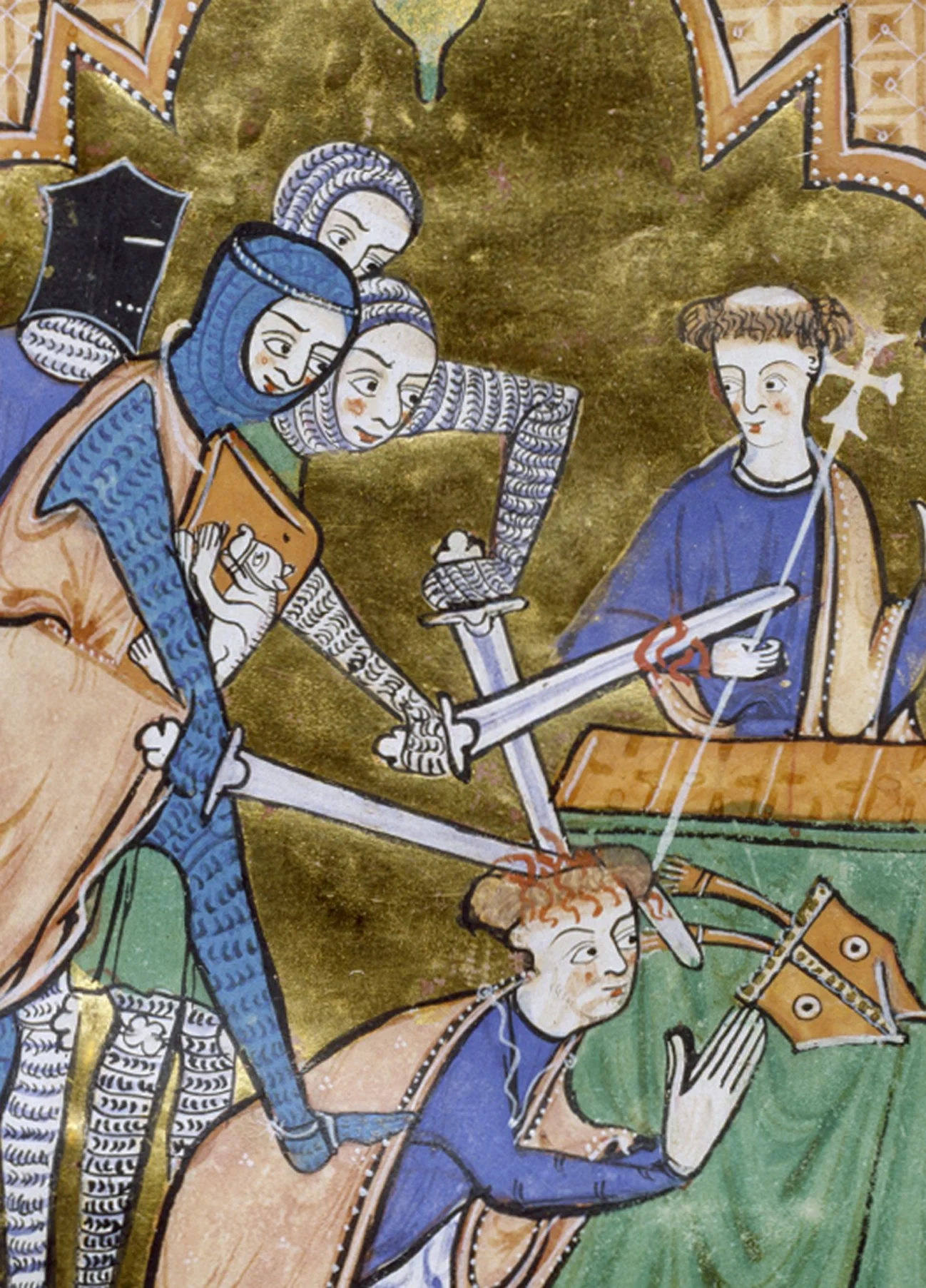
Read MoreAn 1823 William Stone facsimile of the “Declaration of Independence” — a document that is still more of an ideal than a reality.
Whenever there’s a civic holiday coming up, the recessional hymn at our church is always “America the Beautiful.” We in the choir usually sing all four verses, and we always get a round of applause at the end — for us, for the country, maybe both.
I’ve never liked the song. It’s no “Battle Hymn of the Republic,” which I find far more melodic and moving. But lately my antipathy toward “America the Beautiful” has taken on deeper meaning.
Read MoreThe poster for “Wolf Hall: The Mirror and the Light,” now airing on PBS’ “Masterpiece.” Its story of power and glittering doom in Tudor England holds up a mirror to our own mirthless times.
“Uneasy lies the head that wears the crown,” — Shakespeare, “Henry IV, Part 2”
“Wolf Hall: The Mirror and the Light” and “Marie Antoinette” — airing back to back on PBS’ WNET-Channel 13 on Sunday nights — give us two kings in crisis as seen through the eyes of two insiders who will soon be axed.
Read MoreJohn Trumbull’s 1806 oil portrait of Founding Father Alexander Hamilton, a man who wrote his way out of life’s troubles until the day he no longer could.
In the musical “Hamilton,” Alexander Hamilton sings about writing his way out — of the tragic storm on his childhood home of Nevis, an act that would set him on a course for New York and destiny, and later out of scandal.
That’s the good thing about being a writer — maybe the bad thing, too — you can write your way out of almost anything but especially tumult as you try to make sense of the irrational.
This week, I was verbally attacked by two people.
Read More